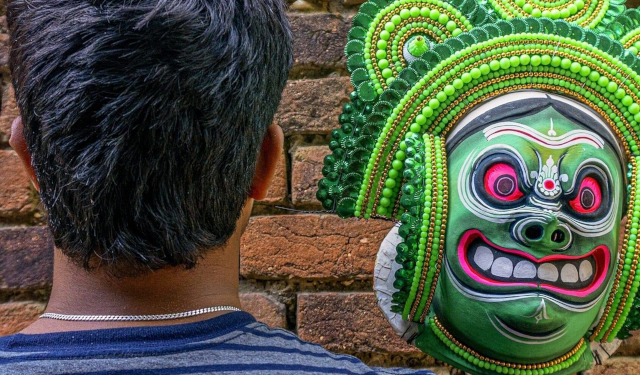
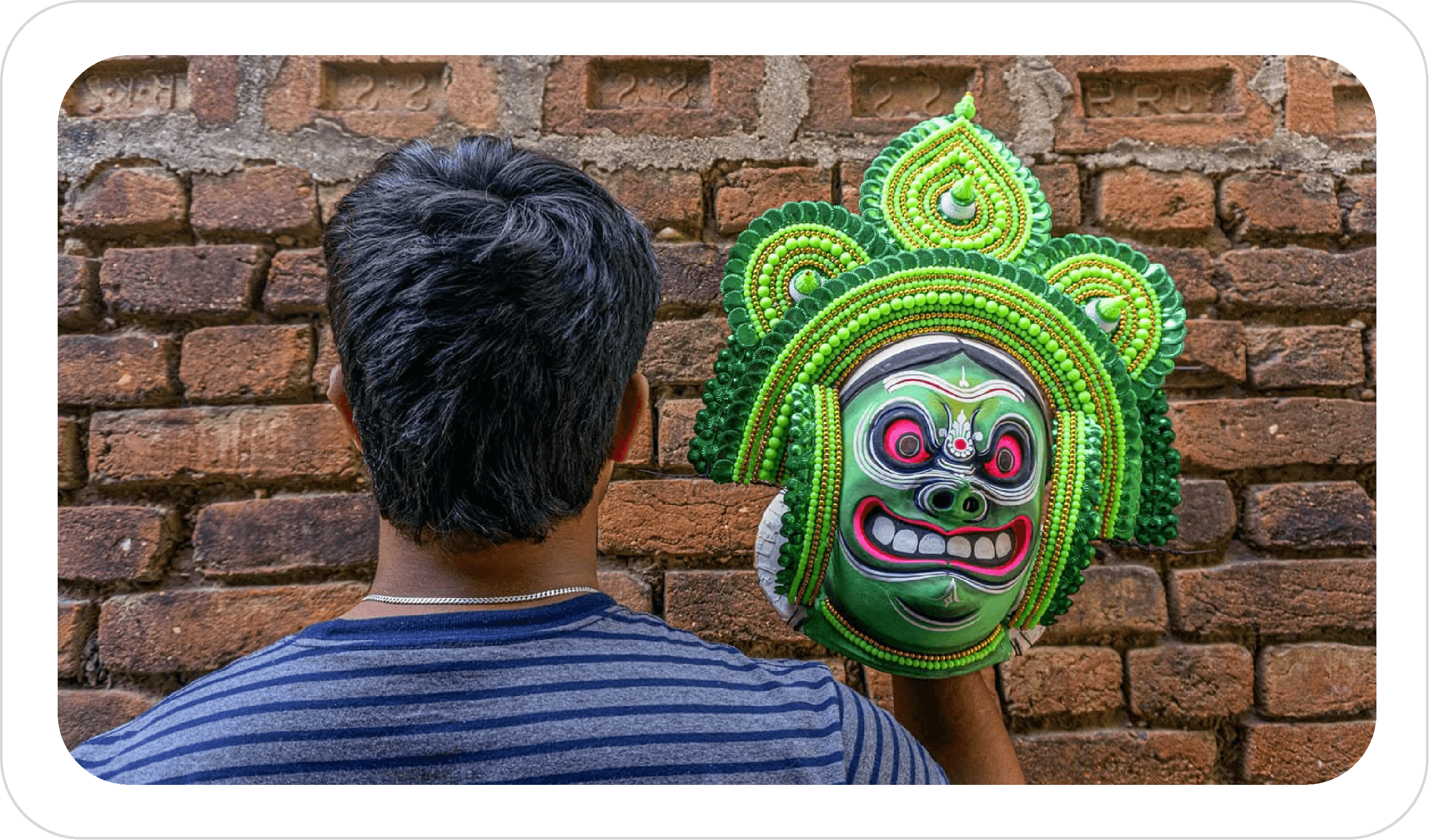
Every corner of India preserves history through living craft traditions, and Purulia Chhau masks stand out as a remarkable blend of sculpture, painting, theatre, dance, and mythology.
1. Introduction: India’s Living Craft Heritage
Every individual mask represents a specific character. Each colour tells a story, and each detail reflects inherited artistic skill passed down through generations.
2. Geographical and Cultural Context
West Bengal
Situated in eastern India, West Bengal carries a rich cultural landscape that includes the poetry of Rabindranath Tagore, Baul songs, terracotta temples, Kantha embroidery, and vibrant folk traditions.
Purulia
Located on the western edge of West Bengal, Purulia is part of the ancient Chotanagpur Plateau. Indigenous communities such as the Santhal, Munda, Oraon, Mahali, and Bhumij continue to preserve traditions through festivals, music, storytelling, and dance.
3. Charida: The Village of Masks
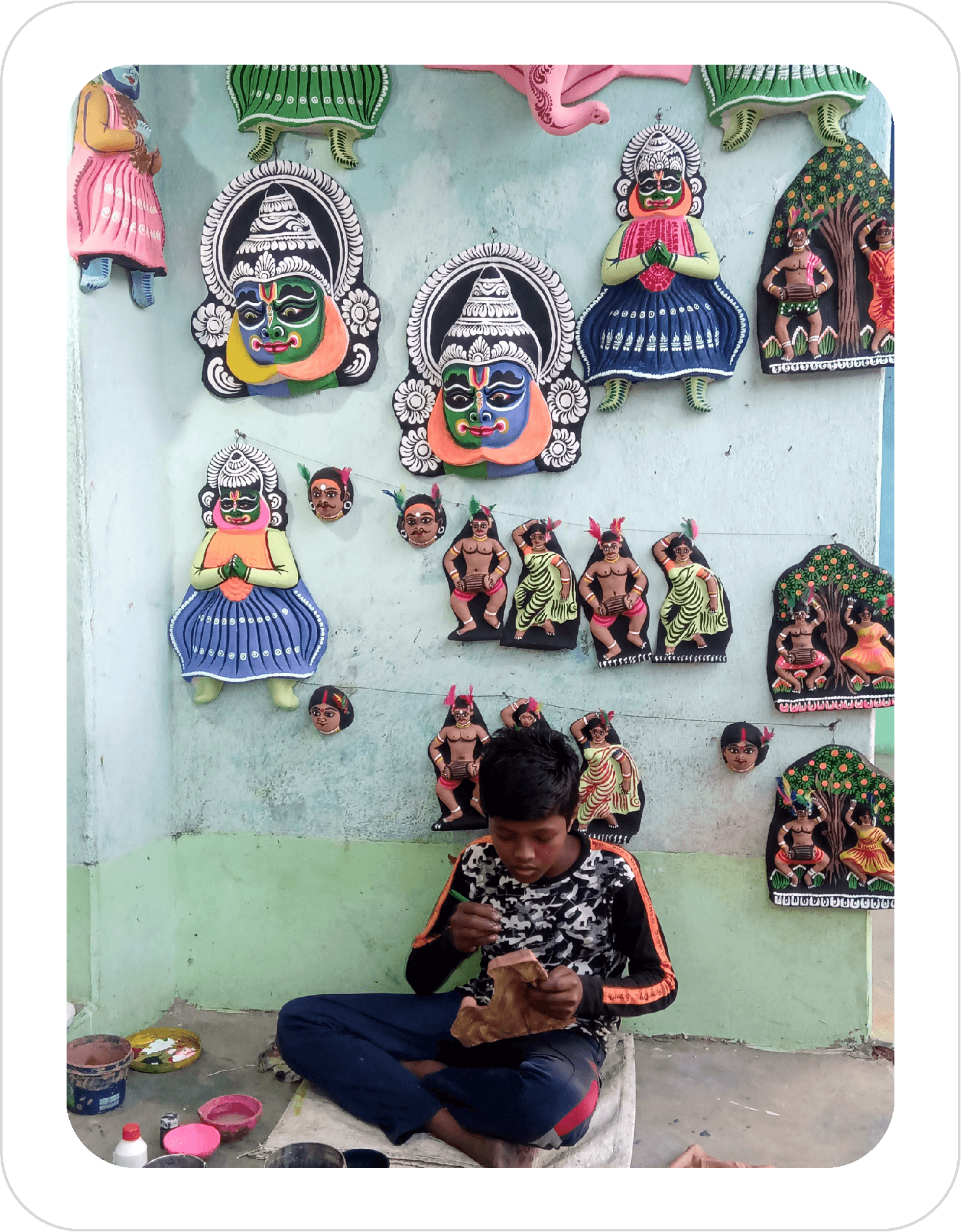
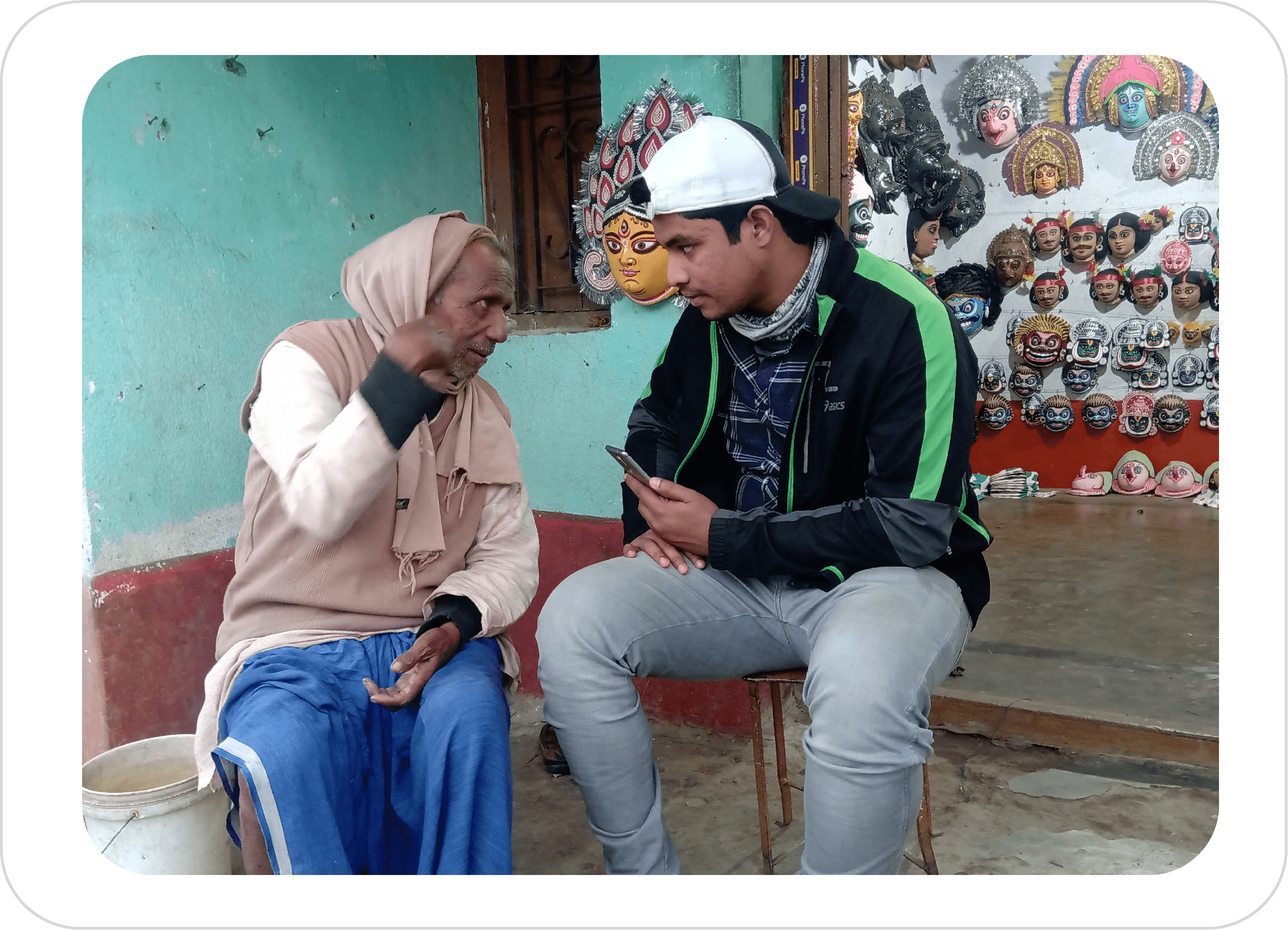
At the foothills of the Ajodhya Hills lies Charida, widely known as Mukhoshpara (the Village of Masks). For over 150 years, generations of Sutradhar artisans have handcrafted Purulia Chhau masks.
It is believed that King Madan Mohan Singh Deo of Baghmundi invited skilled craftsmen from Bardhaman to create ceremonial idols and masks for performance. Over time, those artisans settled in Charida.
Today, nearly every household in Charida contributes to mask making. Courtyards are filled with clay, paper, paint, and decorative materials as families collaborate to sustain cultural identity and livelihood.
4. Chhau: Dance Beyond Words
Purulia Chhau is a dynamic folk dance that blends martial movement, storytelling, music, and theatre. Performers rely on body movement, acrobatics, and rhythm rather than spoken dialogue.
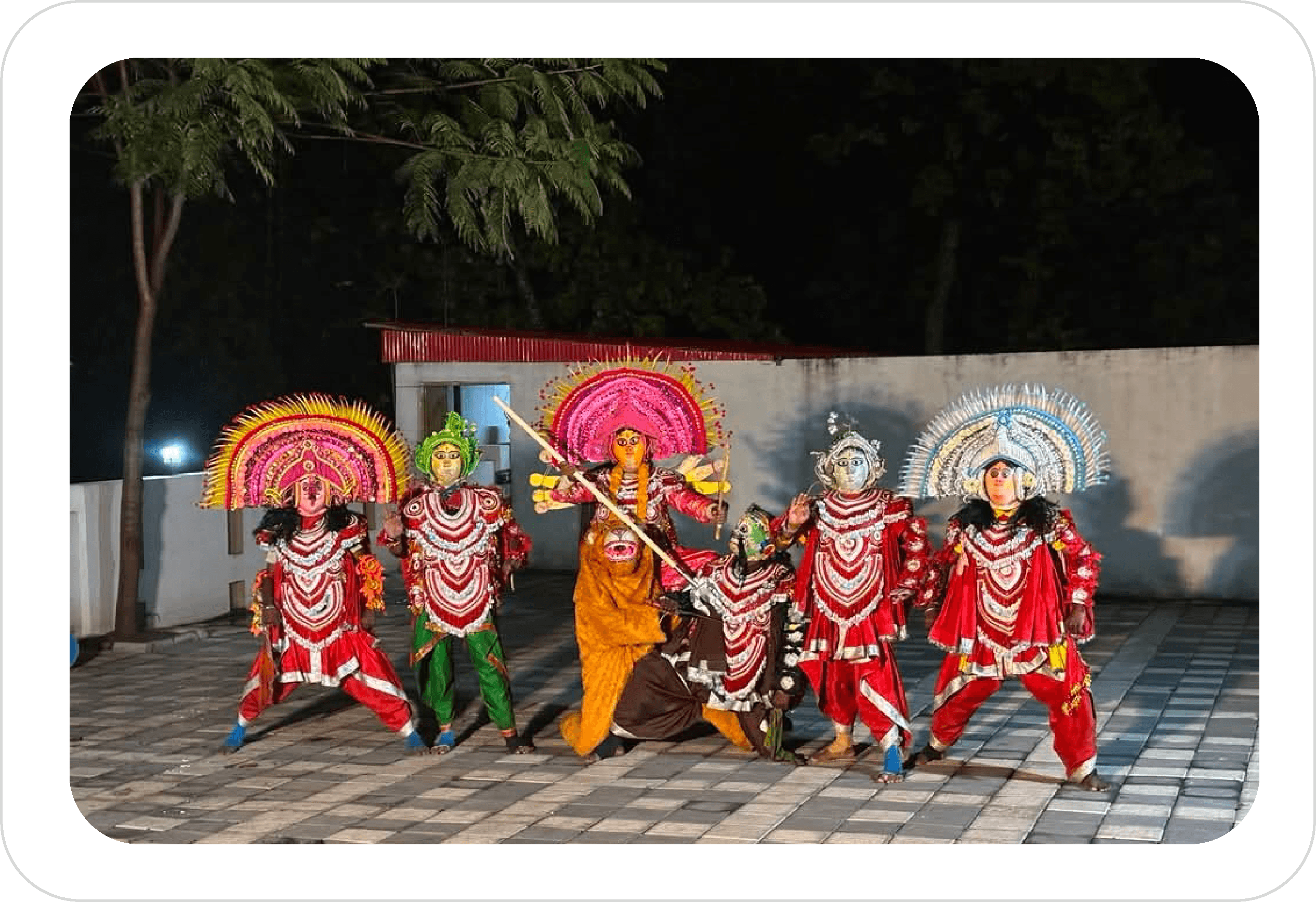
Stories are drawn from the Ramayana, Mahabharata, Puranas, and local folklore. The dance is guided by traditional instruments like Dhamsa, Dhol, Nagara, Mohuri, and Shehnai.
In 2010, Chhau dance was inscribed on UNESCO’s Representative List of the Intangible Cultural Heritage of Humanity.
5. The Mask as the Soul of Performance
The mask is far more than costume. The moment the performer wears it, the character comes alive. Through colour, expression, ornamentation, and crown design, the audience recognizes role and temperament without a spoken word.
Faces of Mythology
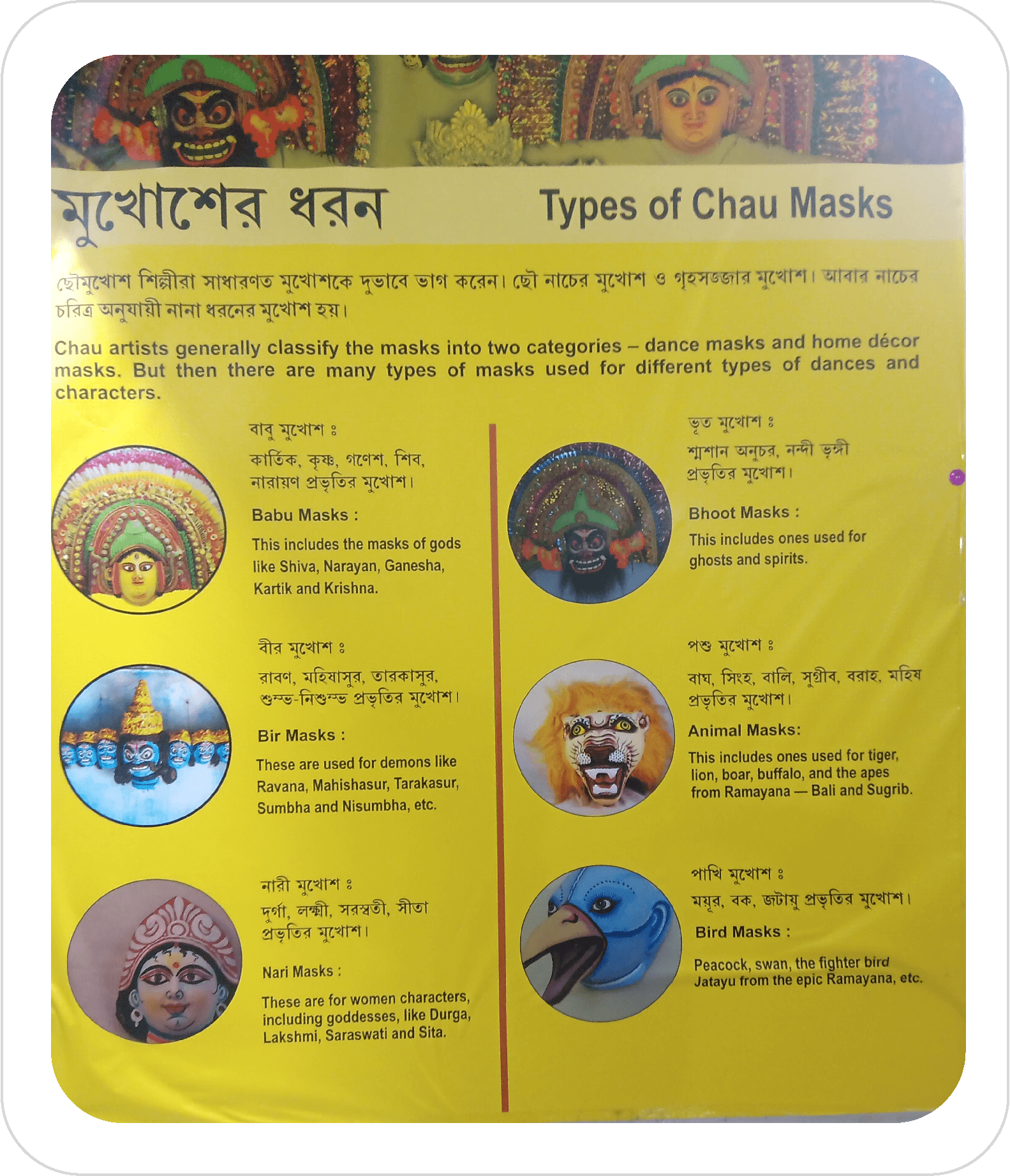
- Divine Masks (Babu): Shiva, Krishna, Rama, Lakshmana
- Goddess Masks (Nari): Durga, Lakshmi, Saraswati, Kali, Parvati
- Demon Masks (Bir): Ravana, Mahishasura, Nishumbha
- Spirit Masks (Bhut): Ghosts, attendants, supernatural beings
- Animal and Bird Masks: Lion, Tiger, Hanuman, Sugriva, Bali, Peacock, Swan, Garuda, Jatayu
The Handcrafting Process
- Moulding: A clay mould is carefully sculpted.
- Layering: Paper and cloth layers are applied using natural adhesives.
- Drying: The formed structure is dried in sunlight.
- Refining and Painting: Surface details are refined, coated, and painted.
- Decoration: Final ornaments include shola work, zari, sequins, coloured foils, beads, and feathers.
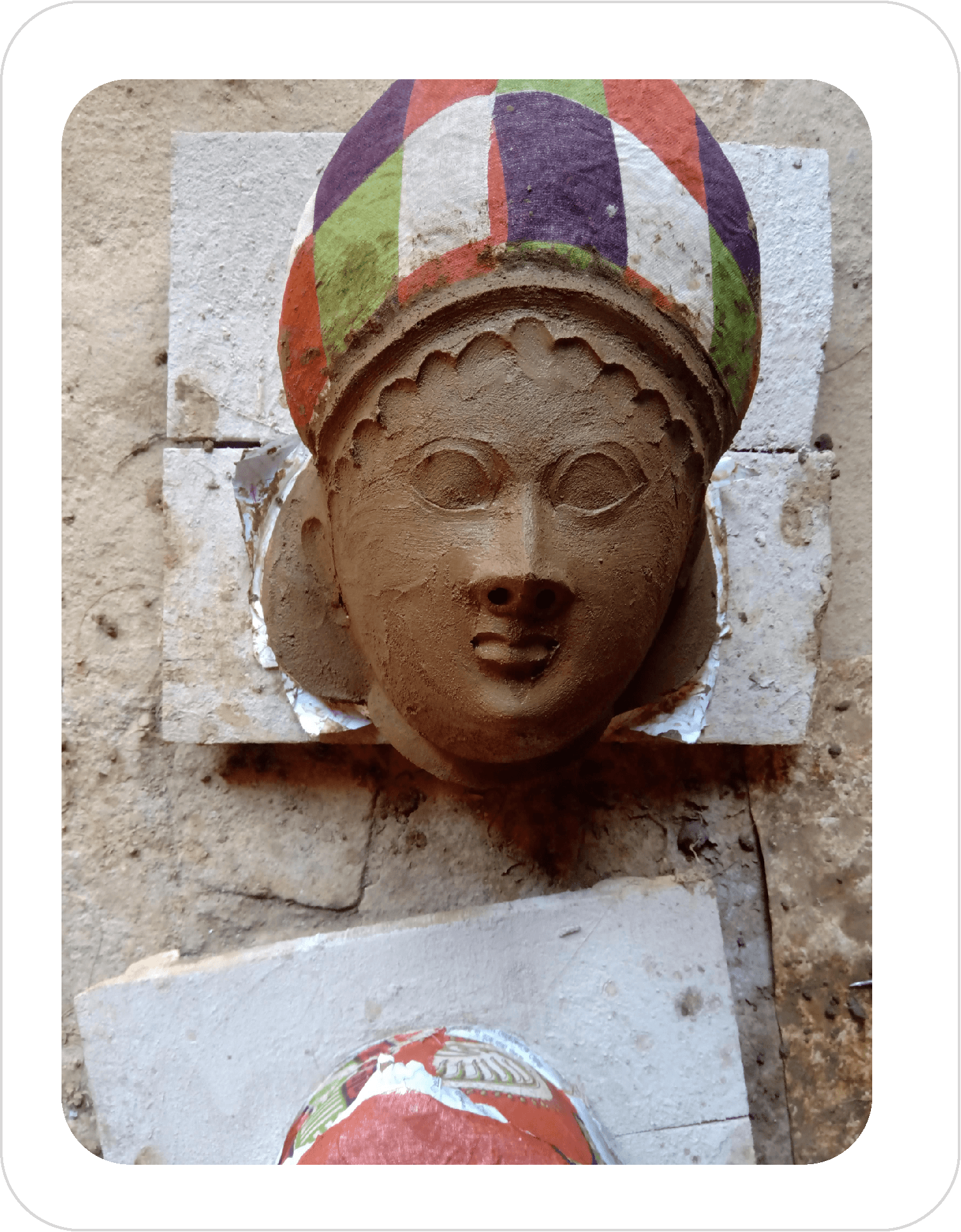
Each stage demands patience and precision inherited across generations, and no two masks are exactly alike.
Color Symbolism
- Yellow and Gold: Divinity, purity, wisdom
- Red: Courage, energy, strength
- Green: Prosperity, balance, heroic presence
- Black and Dark Green: Demonic and supernatural representation
6. Travel Logistics to Charida
- By Train: Travel from Howrah, Shalimar, or Santragachi to Purulia Junction (around 5-6 hours). From there, Charida is about 35-40 km away by local bus, shared jeep, or taxi (about 1 hour).
- By Road: A 6-7 hour drive from Kolkata via NH19 and SH4 through Durgapur, Bankura, Purulia, and Baghmundi.
Photo References
All images in this documentation are from fieldwork in Charida village, showcasing the living tradition of Purulia Chhau mask making.
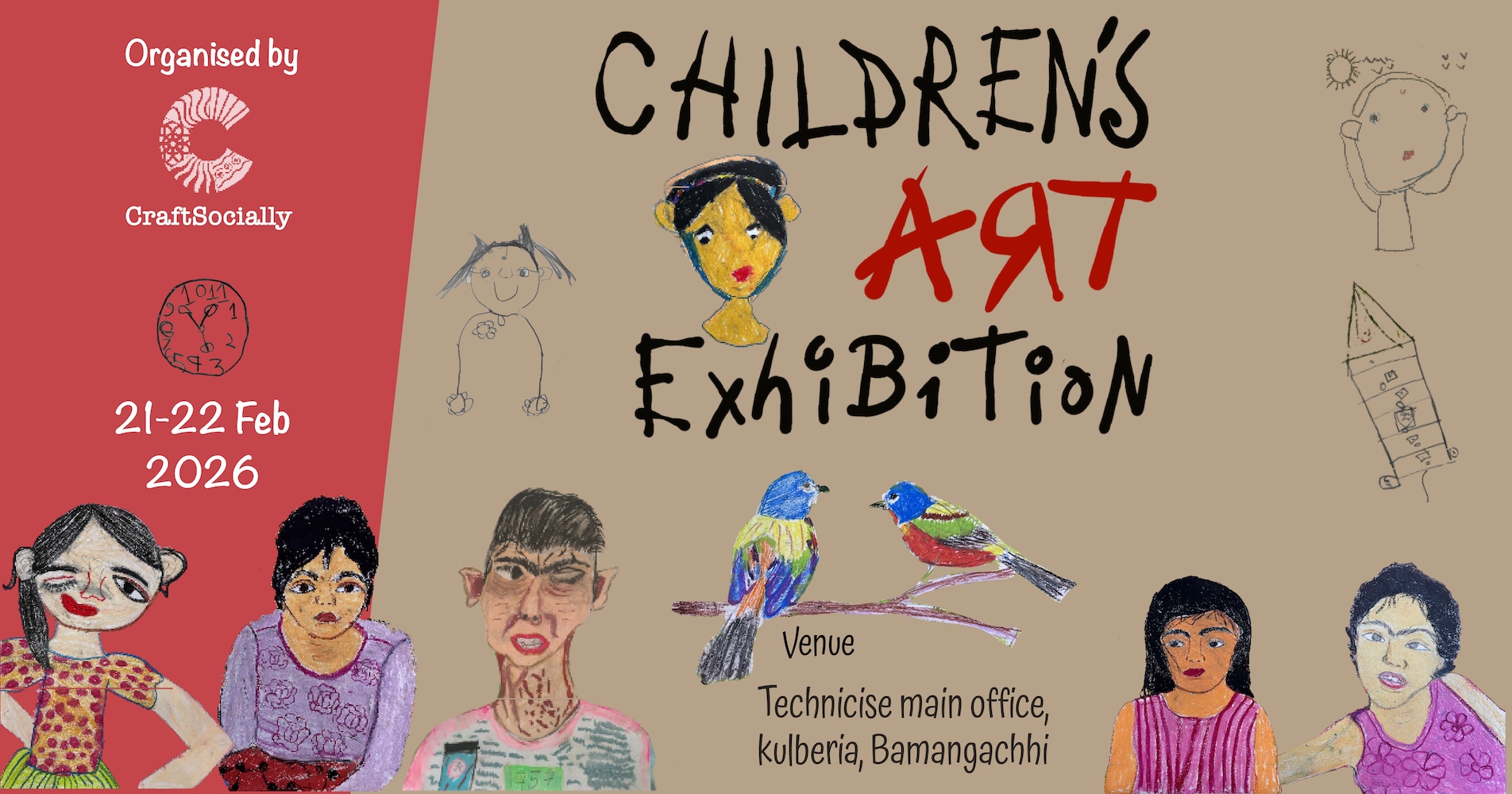 CraftSocially Child Art Exhibition 2026 – Registration Open!